ROAD CONSTRUCTION & INFRASTRUCTURE
Drainage Construction
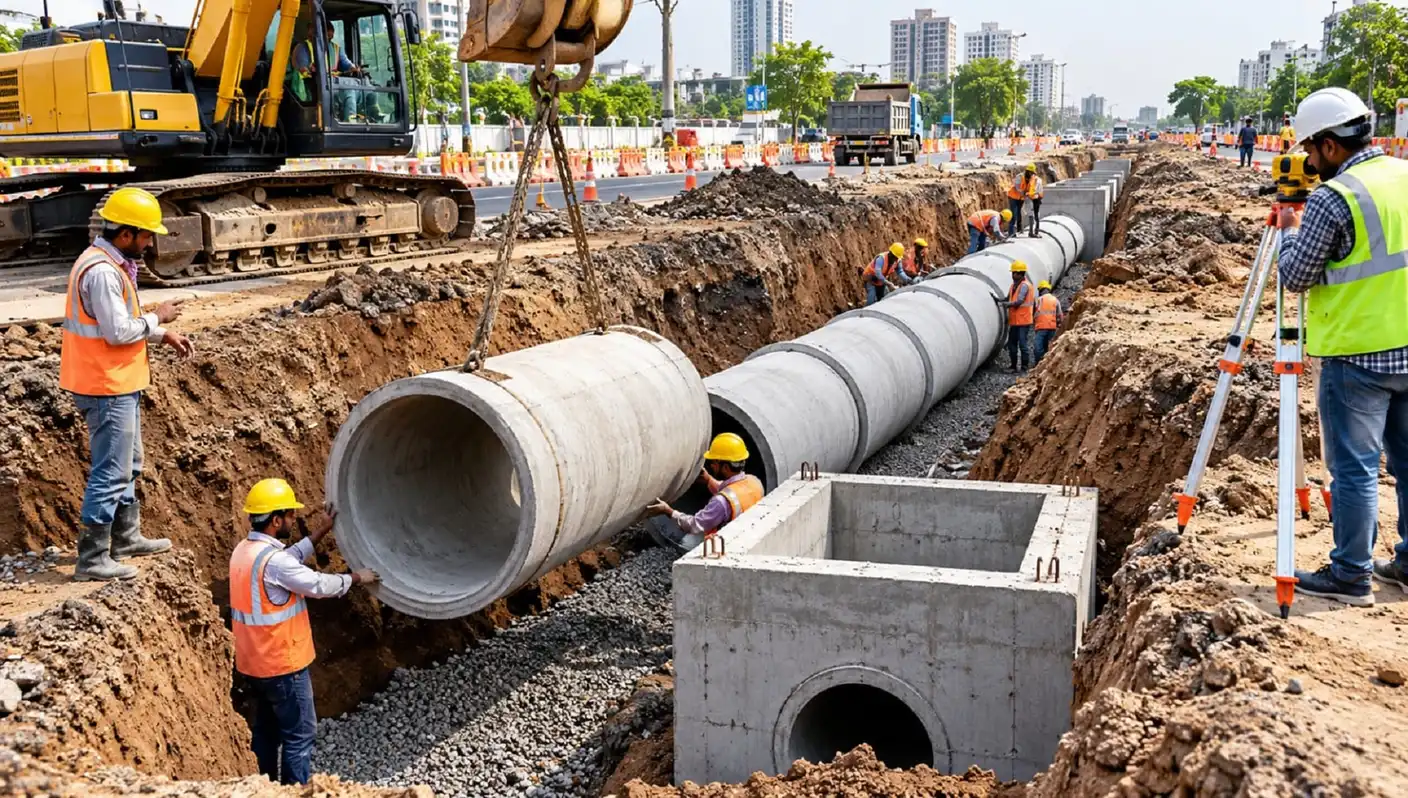
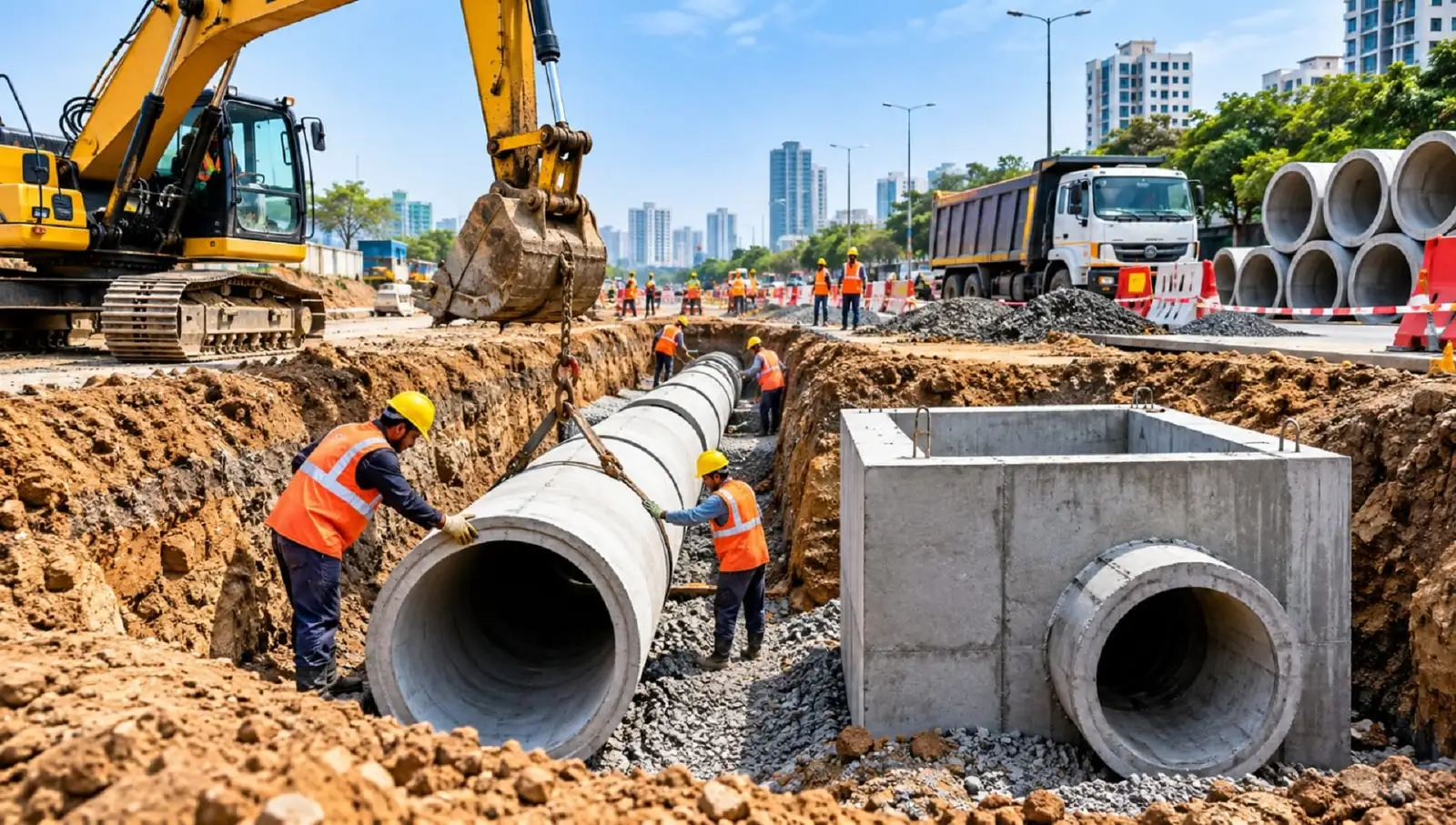
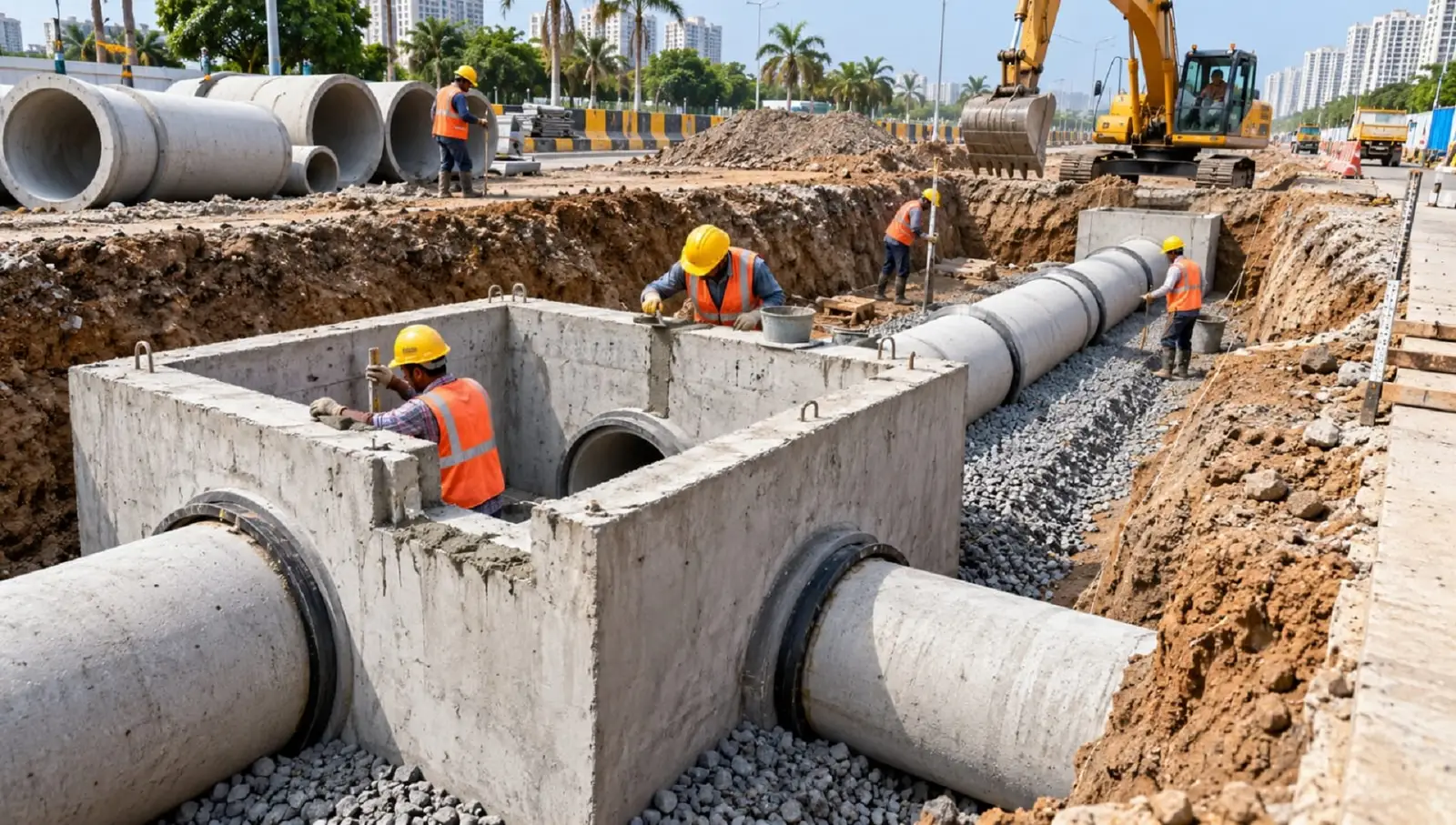
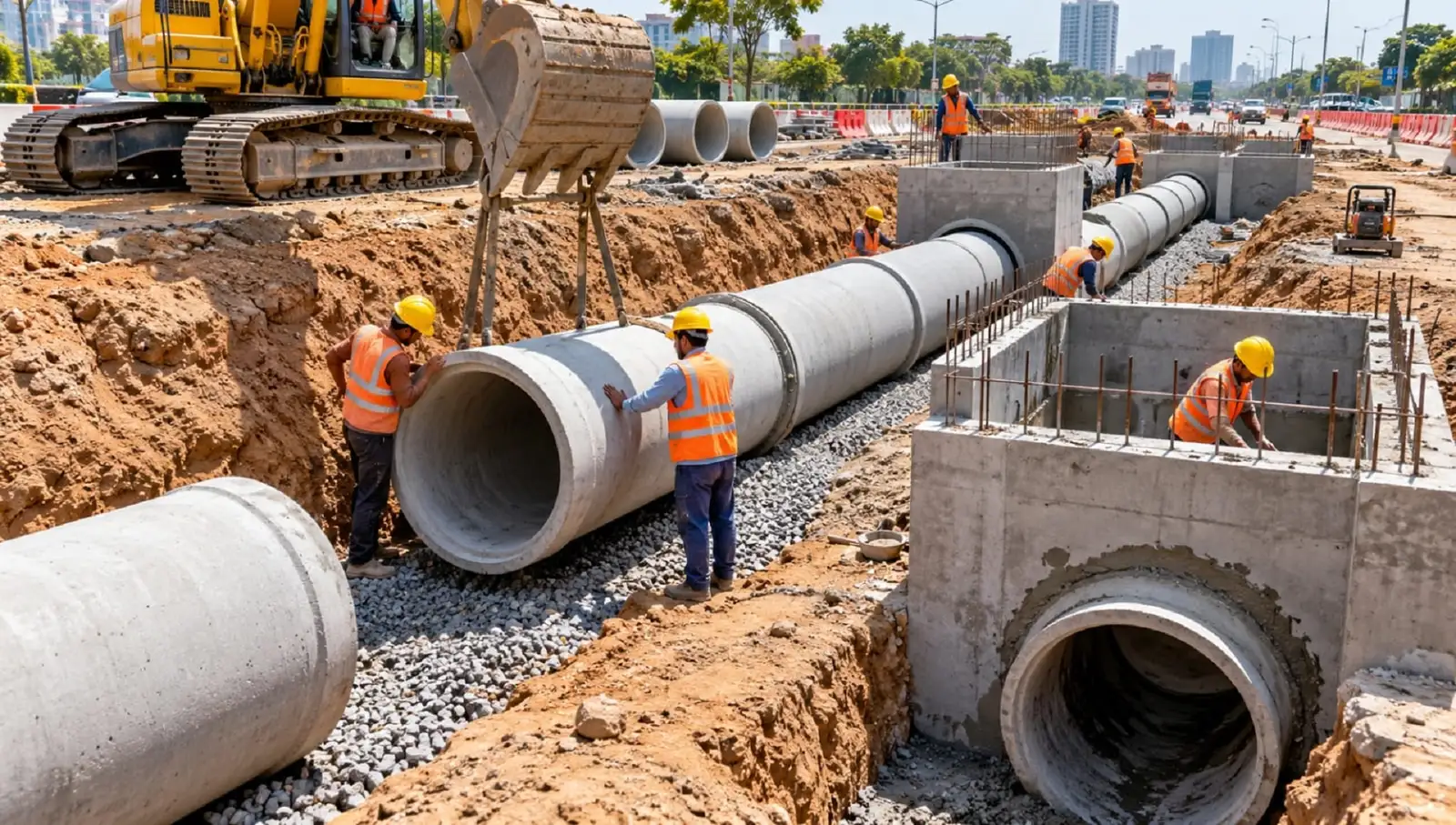
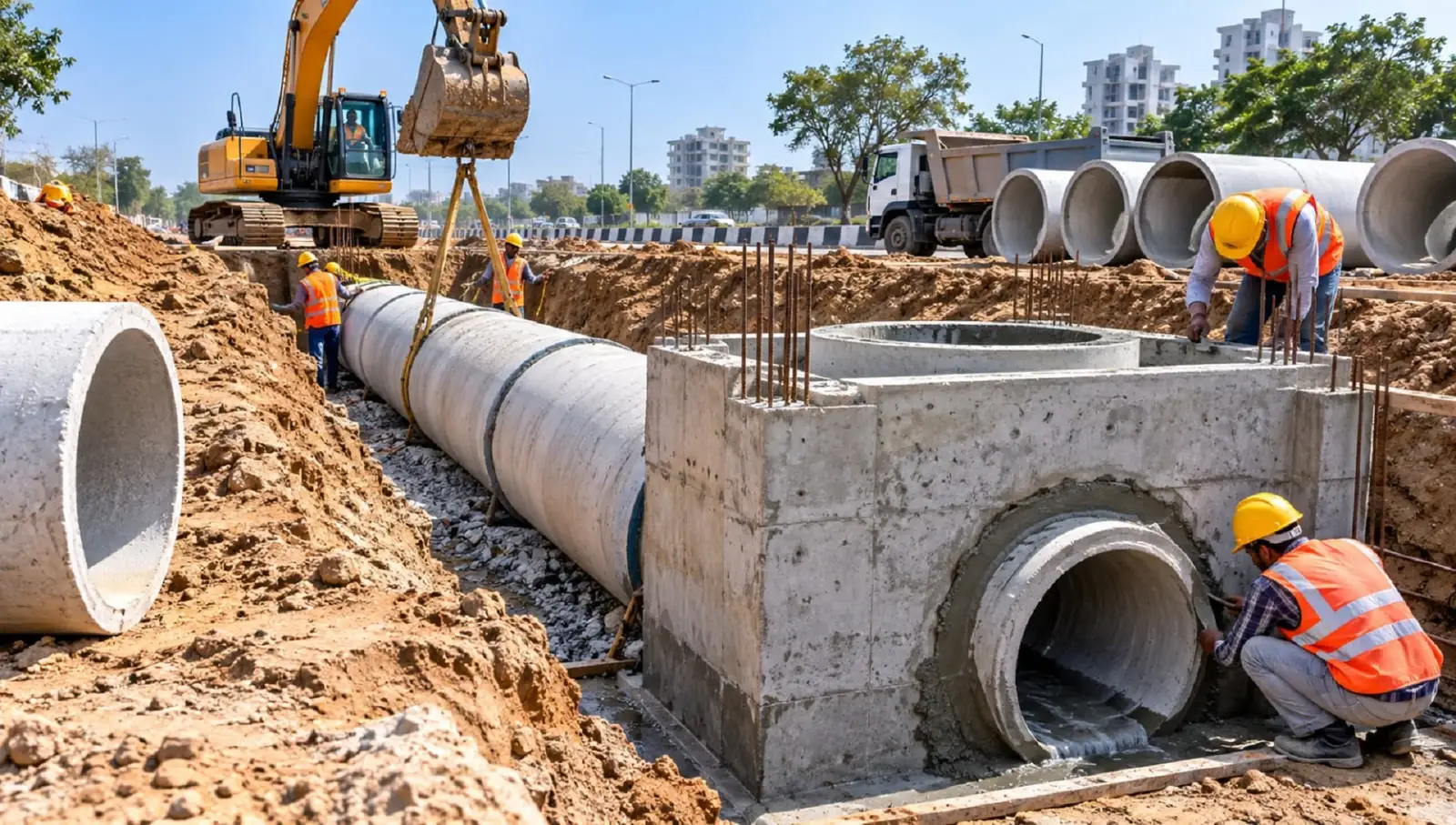
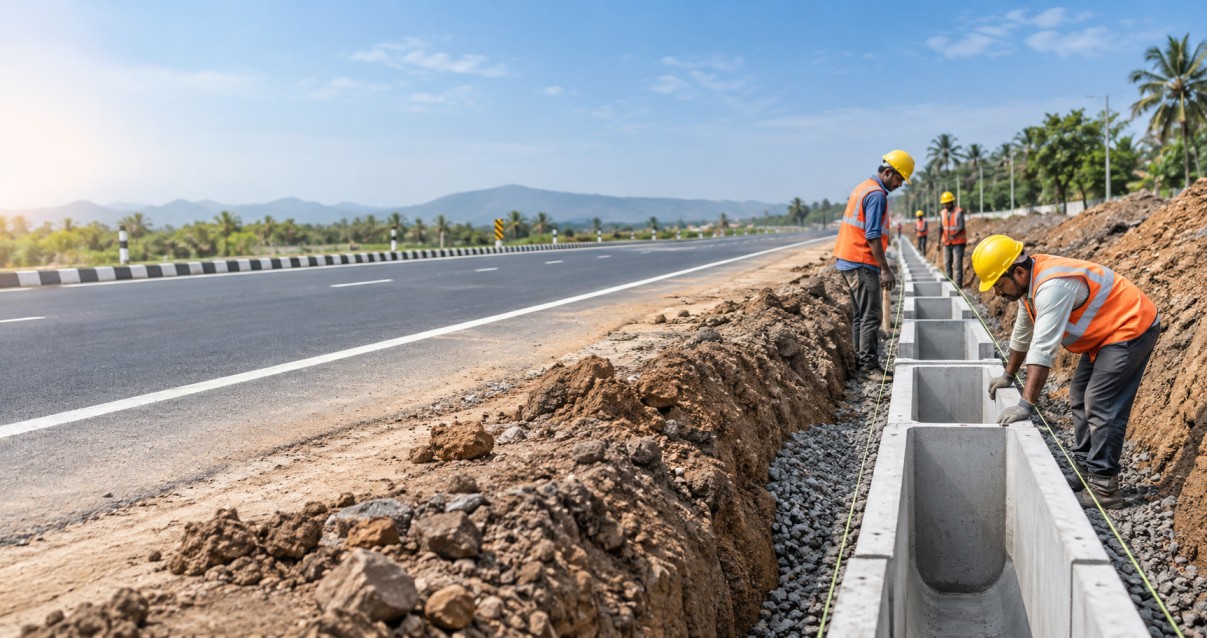
Road drainage construction helps move rainwater away from the pavement, access routes and adjoining site areas.
Overview
Standing water can affect road safety, surface condition and the underlying layers. A drainage scheme considers where water arrives, how it flows and where it can be discharged. Jay Ambe offers road-edge and site drainage work alongside new road construction, repairs and infrastructure projects. Levels, outlets and connections are coordinated with the finished road surface.
Explore our Road Construction & Bitumen Work Specification for material and layer details, and see Our Equipment for the machinery behind the work.
Key capabilities
- Surface-water routes considered with road levels
- Channels and outlets coordinated with site layout
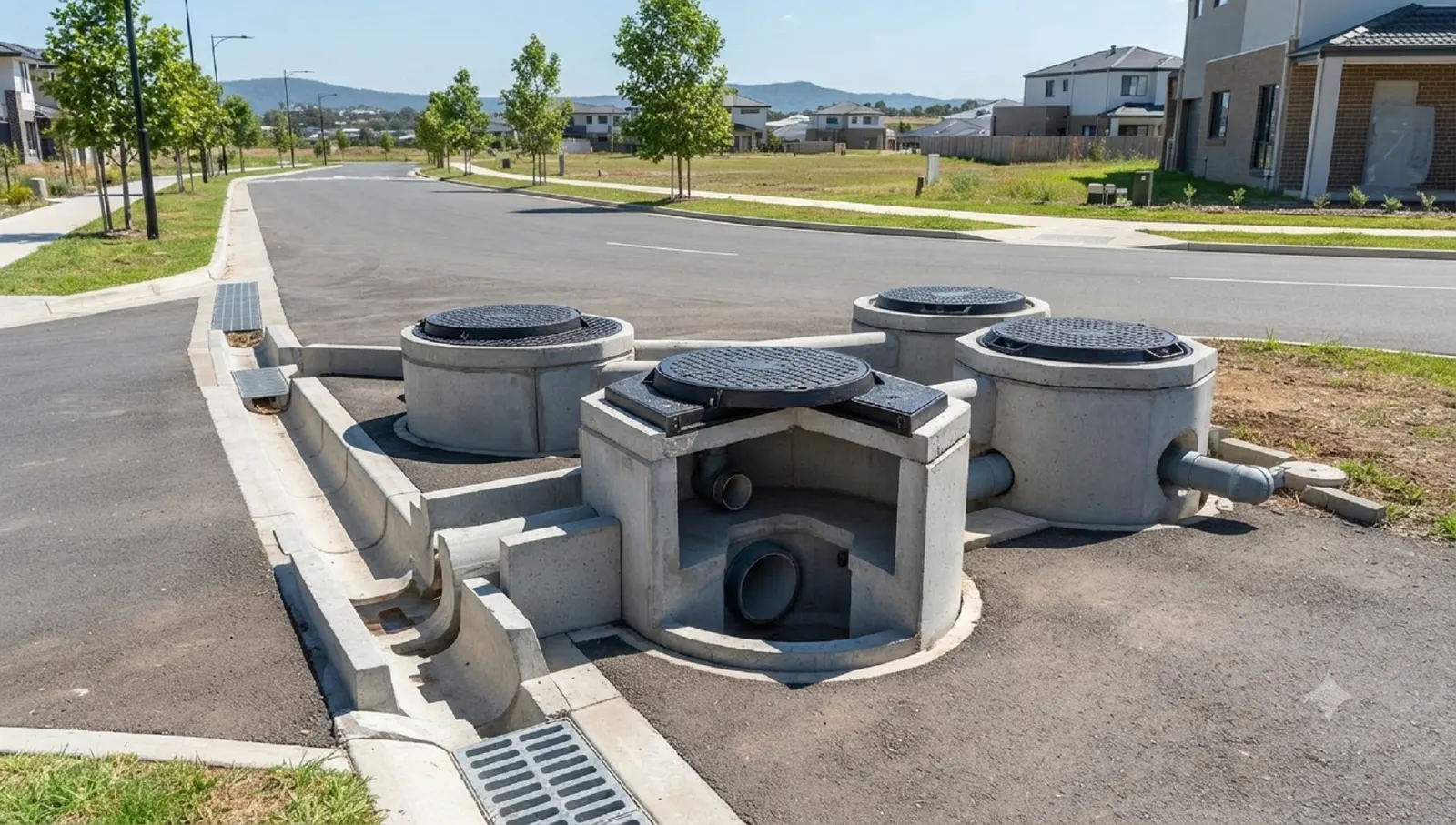
- Integration with kerbs, footpaths and road edges
- Drainage provision for new and upgraded access roads
Scope of work
- Assess existing falls, low points and available outfalls.
- Set out the drainage alignment and levels.
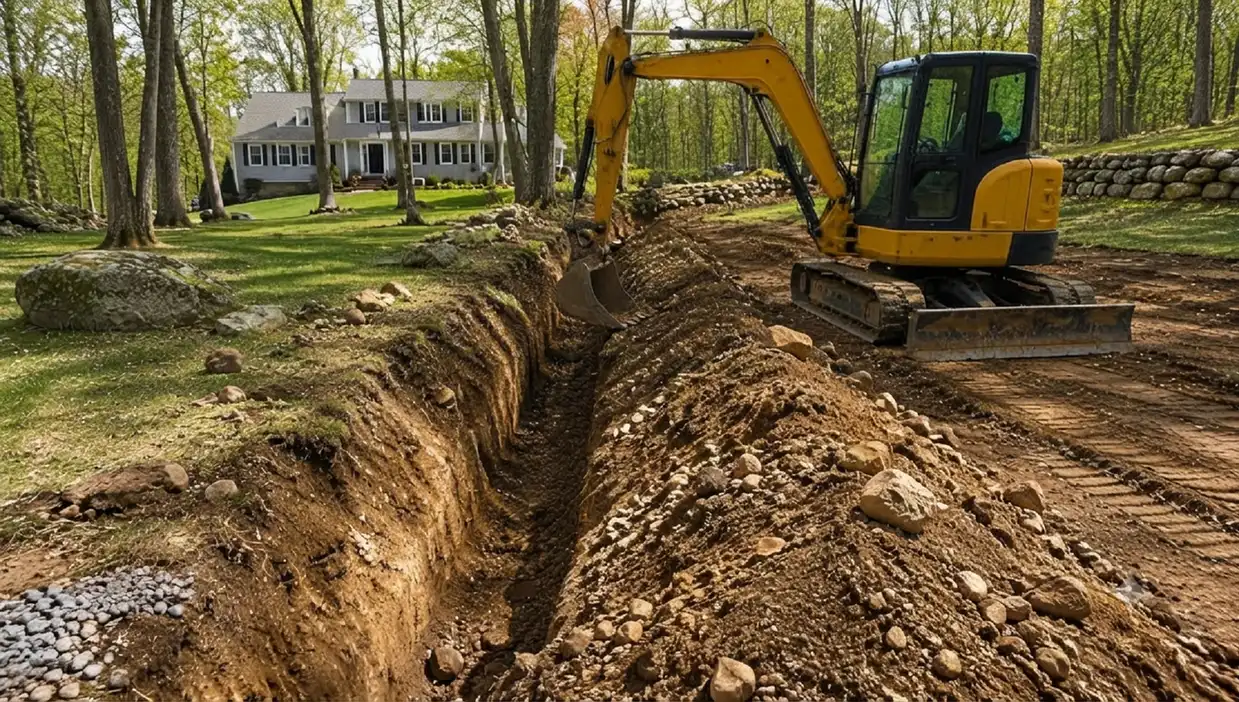
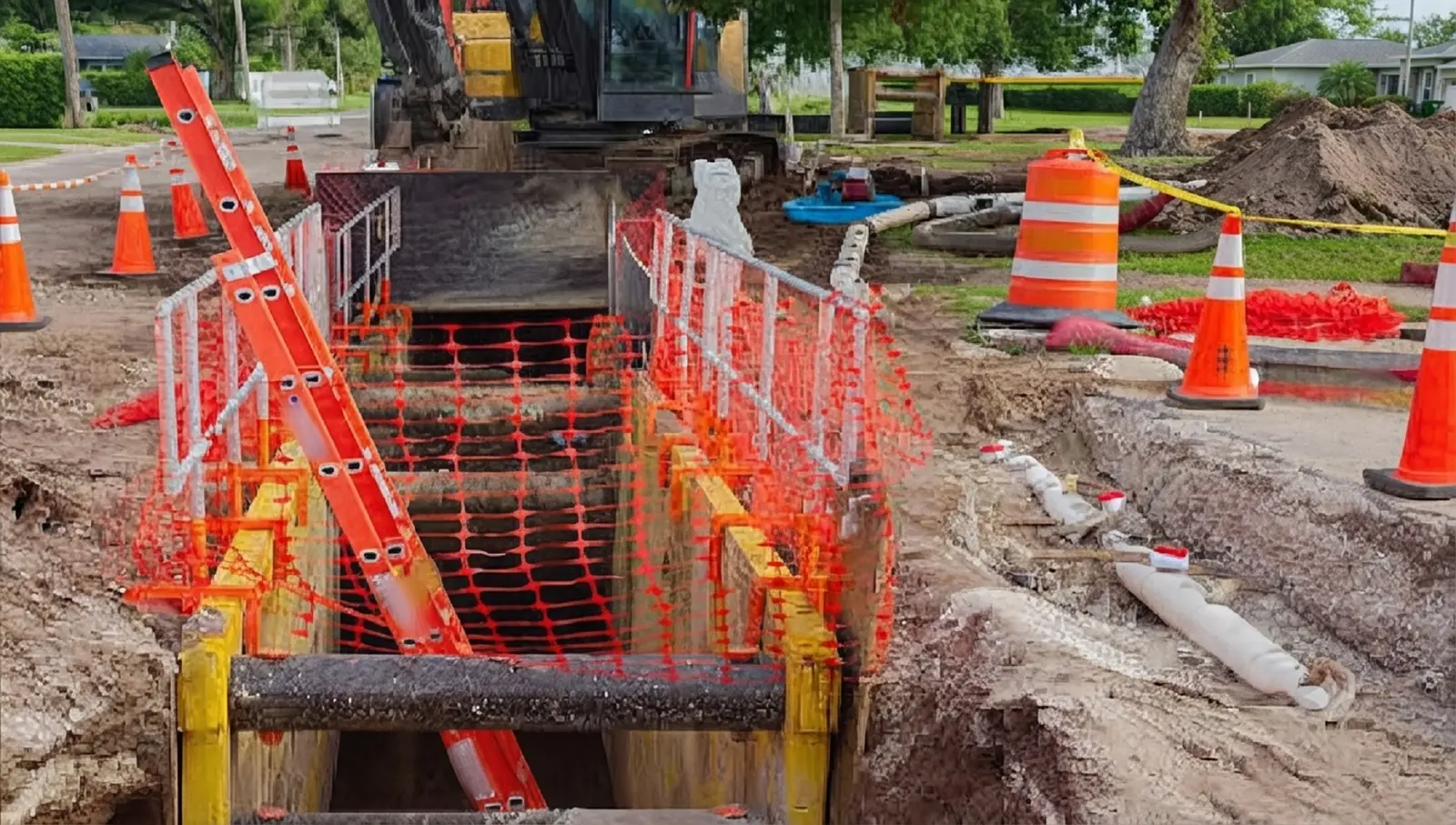
- Excavate and prepare the required base or trench.
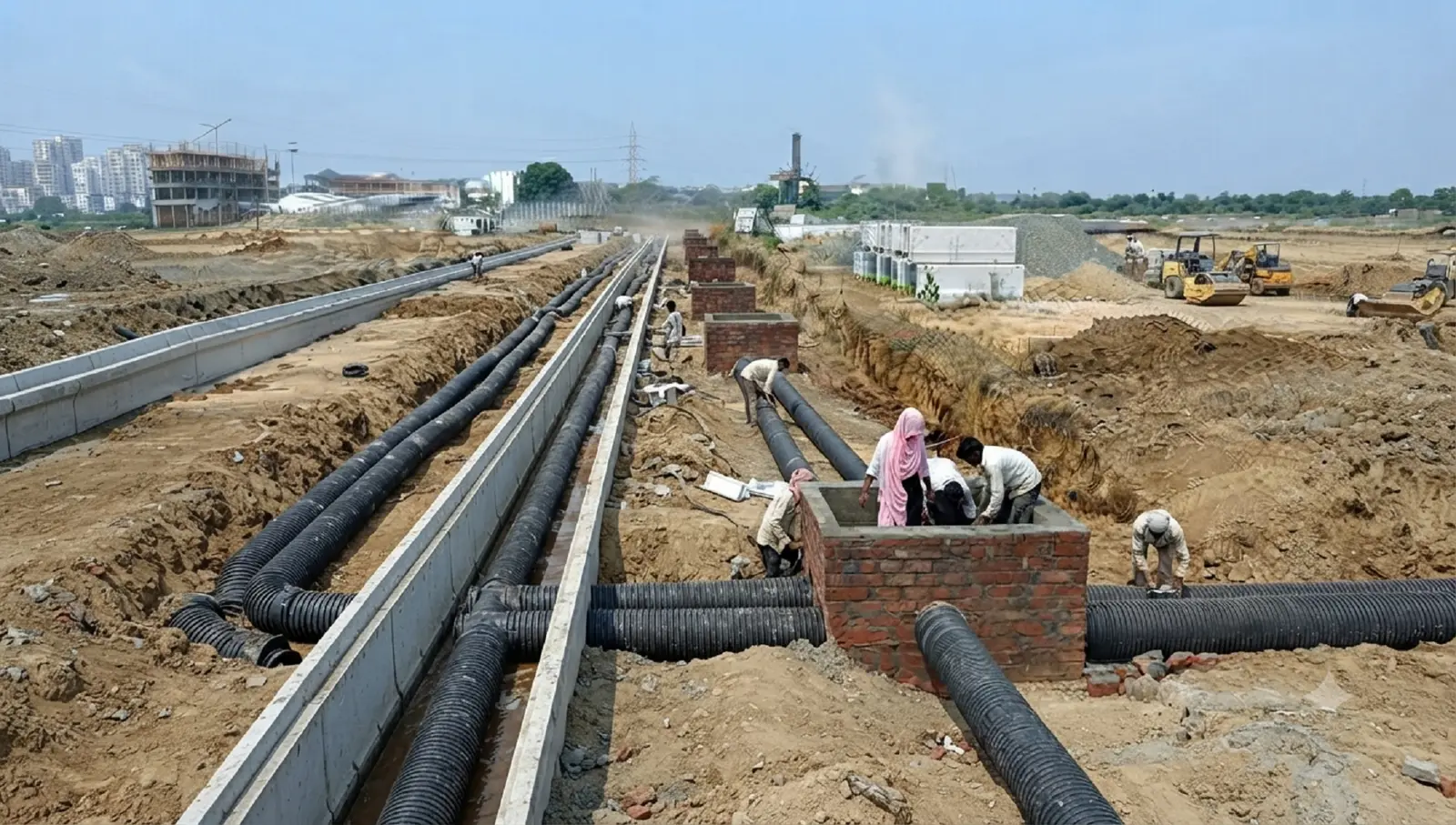
- Install channels, drains, pipes or chambers as specified.
- Connect outlets, backfill and check flow and finishes.
Work process
- 01Site levels
- 02Drainage layout
- 03Excavation
- 04Drain construction
- 05Outlet and flow checks
Applications & site types
- Industrial sites
- Commercial premises
- Residential layouts
- Internal and approach roads
Frequently asked questions
Often yes, but the available levels and a suitable discharge point need to be checked.
Surface falls, blocked outlets or surrounding site levels can all affect drainage.
Yes. These elements should be set out together so water is directed to the intended outlet.
Related work & materials
Plan the right road-work scope.
Tell us about your site, expected use and preferred timeline. We can discuss a practical scope for the work.